Risk Factors
Lameness is a disease caused by the interaction of many different risk factors. Some risk factors can be managed in the short term and others over a longer period of time. There are also factors that can't be controlled but must managed as effectively as possible.
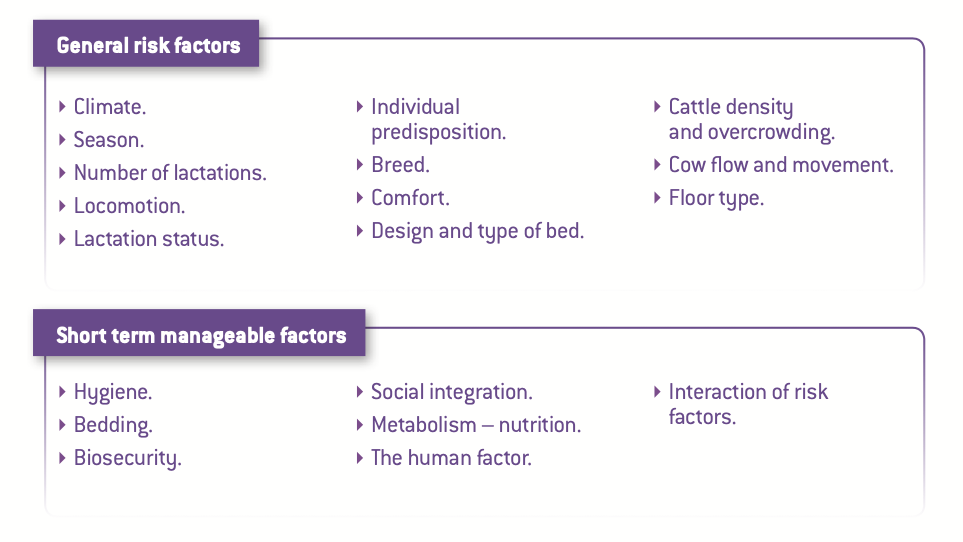
General Risk Factors:
1. Climate
Hooves absorb water and the water content of the horn wall determines its hardness; in humid climates hooves tend to be softer and therefore less resistant. In lower-humidity conditions, hygiene is easier to control, so as a general rule, lameness is less common in dryer climates.

2. Season
In temperate climates, if cattle are grazed, season can impact the amount of lameness seen, with an increase in the summer and early autumn; in subtropical and tropical climates, an increase in lameness is associated with the wet season.
3. Number of lactations
Older cows tend to suffer more mechanical lameness, especially slow-developing diseases such as chronic laminitis. This same correlation does not apply to contagious infectious diseases such as foul in the foot and dermatitis that can appear from very early ages.
4. Exercise
Moderate exercise promotes blood circulation and regeneration of horn tissues, but cows that walk long distances, either in grazing systems or large intensive facilities, have a greater risk of suffering excess horn tissue wear, resulting in thin soles and injury. The frequency of toe wounds among these animals is often high compared to cows that walk less.
In contrast, cows that walk very little, often present problems related to claw overgrowth, usually in the toes, which results in weight distribution overloads and more injuries in the area closest to the heels. Interestingly, younger animals tend to be more nervous and walk faster, with a shortened gait, which means that the impact of their injuries can be higher when walking longer distances.
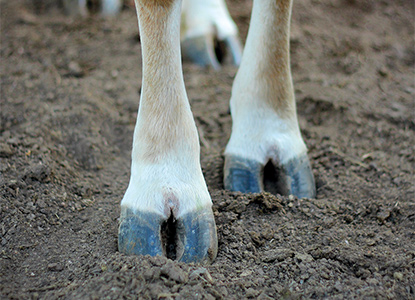
5. Lactation Status
Traditionally, early lactation has been considered to be a risk factor for lameness, but this is not always the case. Good management in the transition period to minimise the loss of body condition can reverse this situation. The question is, do thin cows go lame or do lame cows go thin? The answer is probably a bit of both!
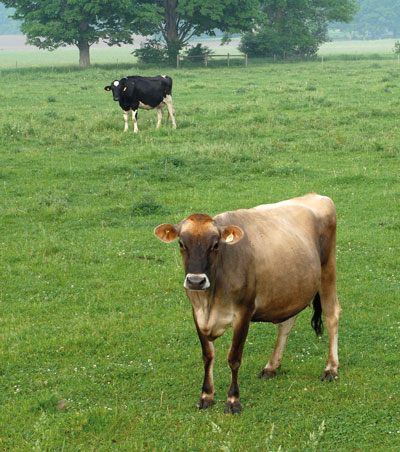
6. Individual predisposition
Some cows are more likely suffer from lameness than others. Generally, the most productive cows in the herd are the most likely to suffer from lameness. It is not entirely known if there is a correlation between the characteristics of cows' legs (including their straightness) and the appearance of lameness, so it is unknown if trying to minimise lameness using only breeding strategies will work. As research and genomic technologies improve, more information will become available to help make appropriate breeding decisions.
7. Comfort
Standing time is a key factor in the development of lameness. Cows only become lame when they are standing (esp. during milking) or walking, therefore the longer they remain lying down (during rest periods), the lower the probability that lameness will appear and the better the healing prognosis of any existing lameness. The only lesions that appear when cows lie down are hock injuries.
8. Lying areas
Cows lie down more easily in open spaces with soft beds (e.g. straw, dry manure, etc.) thus open yards with this bedding maximise lying time and favour foot health. Cubicles are another source of lameness problems: they must be designed so that there is sufficient space in front of the cows for them to be able to correctly move so that they can get up without rubbing against the side walls or the neck rail.
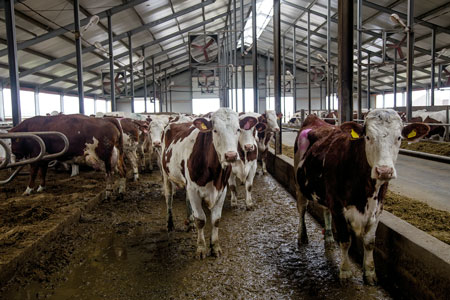
9. Cattle Density
High stock density in cubicle sheds means lame cows lose opportunities to lie down when they most need it, and this impedes their recovery. In open yards, high densities are linked to poorer hygiene and an increase in lameness caused by infection.
10. Cow Flow and Movement
Narrow spaces and closed turns can increase traumatic injuries, especially in areas where cows congregate, such as at water troughs, feeding areas, and milking access points. Appropriate movement enhances foot health and encourages a balanced horn-growth: erosion rate, stimulates blood flow and helps to maintain a healthy foot.
It is important to minimize the turning forces on cows' feet so, where possible, ensuring corners are not too tight is ideal.
11. Floor Type
Whenever possible, cows always choose to walk on soft floors, whether natural or artificial. Mechanically this is important because soft floors supplement and complete the foot suspension apparatus cushioning. Prolonged use of concrete floors, which is typical for confined cows, overloads certain areas of the foot, especially in the posterior lateral hoof, and this increases the risk of the animals suffering injuries in these areas.
Very rough concrete floors can cause overwear, thin soles, and potentially, severe injuries. If they are too smooth or worn down, cows avoid, or hesitate to walk on these areas which can lead to a disruption in cow flow, slips, falls, and traumatic injuries. In grazing systems, special care must be taken when designing the tracks to ensure they are wide enough and surfaces are non-traumatic and have sufficient drainage.
Short-term manageable factors:
1. Hygiene
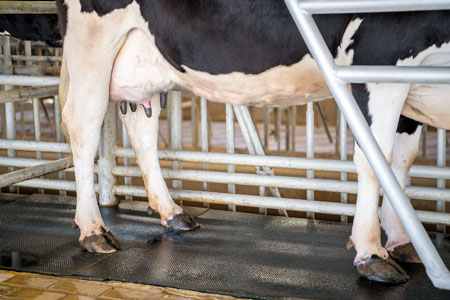
Environmental conditions are important, in particular the humidity and hygiene of floors. Because hooves absorb water, surface dampness affects their elasticity:
- Hooves that are too dry absorb less impact which can lead to more slips.
- Very moist hooves absorb impact well, but are softer and less resistant to objects on the ground, such as stones.
Slurry has different effects that influence claw deterioration:
- Physical: hooves in continuous contact with slurry absorb moisture and this has a softening effect
- Chemical: the ammonia present in urine has a corrosive effect on the horn tissue which increases bacterial penetration
- Biological: the presence of bacteria can cause infectious diseases, such as digital dermatitis, and can cause heel horn erosion and foul in the foot - all of which can cause lameness and strongly influence weight distribution.
2. Bedding
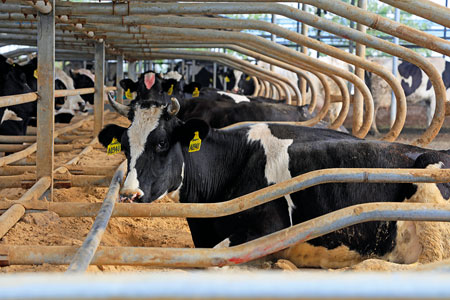
Cows perform better in cubicles with a natural bed of straw, dry manure, or sand. It is important that cubicles with cushioned floors are soft, non-slip, and are properly maintained with a thin layer of natural bedding.
3. Biosecurity
The easiest way to introduce digital dermatitis into a herd is by buying infected animals. The likelihood of introducing this or other infectious diseases is much lower in closed herds. A quarantine of 21 days can be placed on new animals before introduction to the herd, and this should include individual examination, cleaning, and hoof trimming with treatment where necessary, alongside footbathing. It is important to remember to treat heifers as they can be significant reserviors of digital dermatitis.
4. Social Mixing
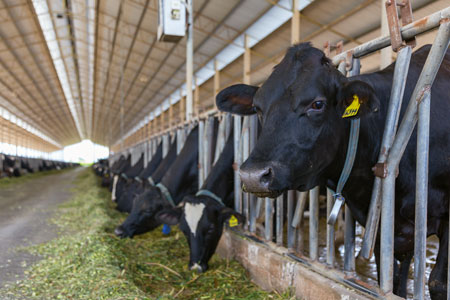
Heifers and dry cows require careful integration into the main herd after calving. Part of the integration process is gradual adaptation to hard floor surfaces and to the cubicle system. Cattle have a social hierarchy and introduction of heifers and dry cows creates challenges in this hierarchy: lower-ranking cows stand for longer, have reduced access to food and water, avoid dominant cows and have an increased risk of suffering lameness.
5. Nutrition
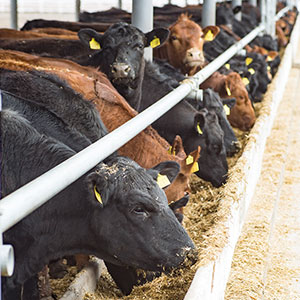
A number of factors related to nutritional management play a key role in foot health. The correct management of the transition period is key to minimising body-condition loss, which is strongly linked to the appearance of lameness. Sudden changes in diet can lead to outbreaks of lameness. The quality of the fibre given, its physical presentation, correct total mixed ration mixing, the quality of the feed offered and inclusion of good-quality silage, all affect hoof horn quality.
6. The human factor
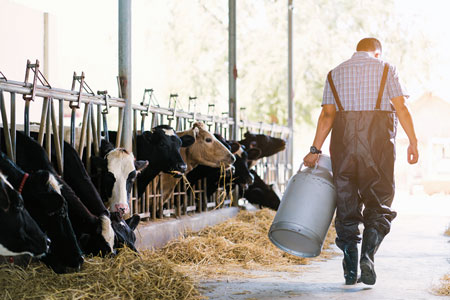
This influences all the other factors: the better the farmer and farm technicians' knowledge of lameness, the better the control of lameness on the farm. Cows must be quietly encouraged to go into the milking parlour - this is especially important in pasture-based systems. The farmer's ability to diagnose lameness early and treat it as quickly as possible is key to improving the animal's prognosis.
In reality, many of these factors overlap, increasing the risk of lameness. Inadequate nutrition can cause many more problems, especially if the cows are uncomfortable and with poor hygiene, leading to complex foot disease with a number of causes.


